connewitz (october 16,1813)
INTRODUCTION
The
Connewitz-Dölitz area was located in the western part of the Leipzig
battlefield.
It was a swampy and wooded area between the Elster and Pleisse
rivers, forming the right flank of the French southern deployment
during the first day of the battle of Leipzig, 16th october, 1813.
Schwarzenberg, the Allied C-i-C, ordered the
2nd Armeeabteilung under GdK Merveldt, or Meerfeldt, (10
battalions, 9 squadrons) to take the right
bank and the bridges over the Pleisse, to outflank the
French forces in Mark-Kleeberg and Wachau. The area was defended by
the French Provisional Division Lefol
(3.5 battalions) and the
26th division (6 battalions) of the
Poniatowski's Polish VII Corps, but
the brigade Aymard
(4 battalions) of the
Augereau's IX Corps and the
Curial's 2nd Old Guard Division (4
battalions of non-French Guards) also took part in the fight in a
moment or another.
Whereas there were only Austrian troops in the Allied side,
the 'French'
side was composed from French, Polish and Rhine Confederation units. At
last, I used the
Polish list in the
Lasalle web site to built the basic force,
using the "French Conscript 1813" as Allied. I have modified
slightly the 'Liberation' lists
for both sides, in order to achieve forces similar in number and
composition, to the actual units fighting in October 1813. The
statistics of the Subcommanders have been diced out according to the
ruleset.
Bibliography
- Maude F.N., The Campaign of Leipzig, Leonaur Ltd, 2007
- Nafziger G., Napoleon at Leipzig. The Battle of Nations 1813,
Emperor's Press, 1996
- Plotho C. von, Relation de la Bataille de Leipzig, Adamant Media,
2006
- Smith D., The Greenhill Napoleonic Wars Data Book, Greenhill
Books, 1998
- Smith D., 1813 - Leipzig: Napoleon and the Battle of the Nations,
Greenhill Books, 2001
TABLE-TOP ADAPTATION
| GO TO THE BATTLE IN PICTURES | ||
 |
 |
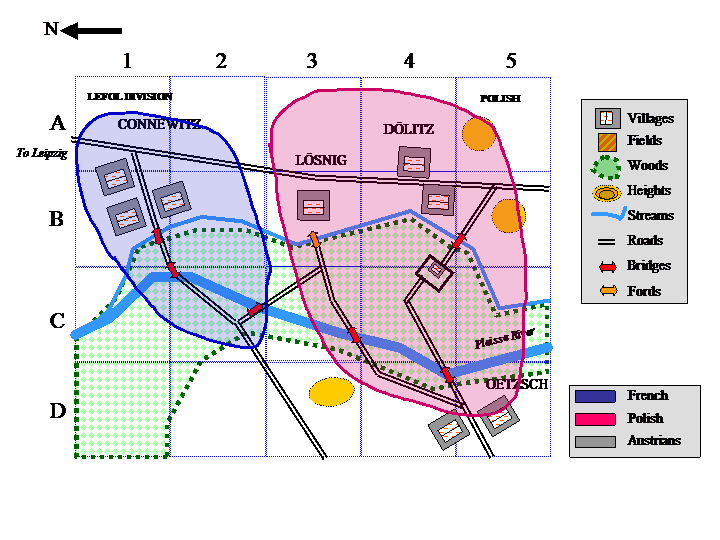 |
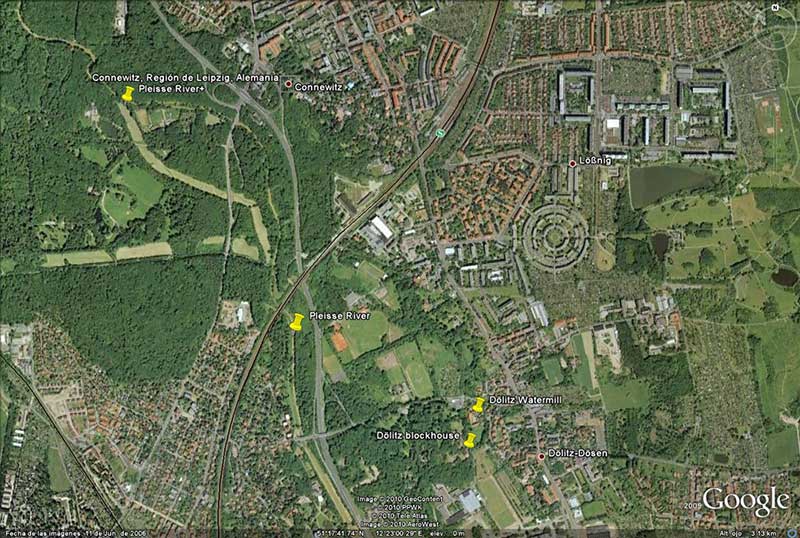
| Old map (Leipzig 1813 - Battle of the Nations | Google Earth | Game map |
 |
 |
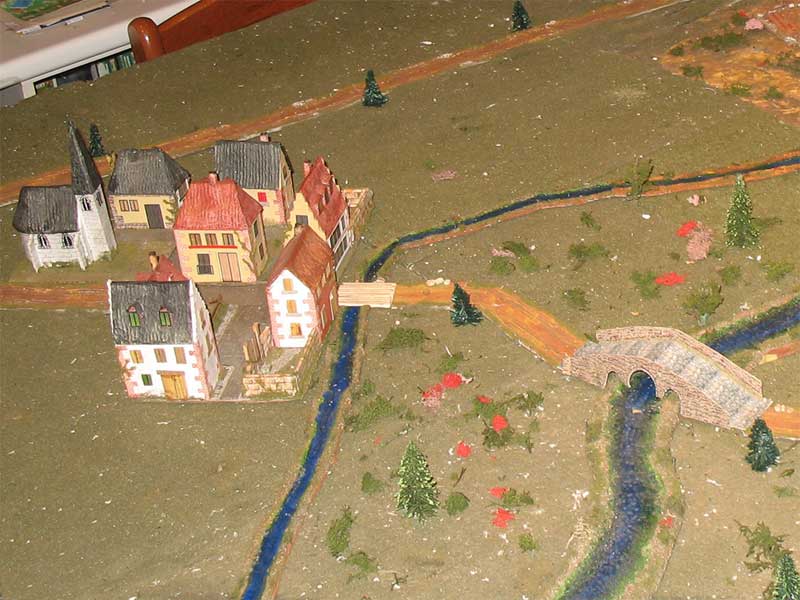 |
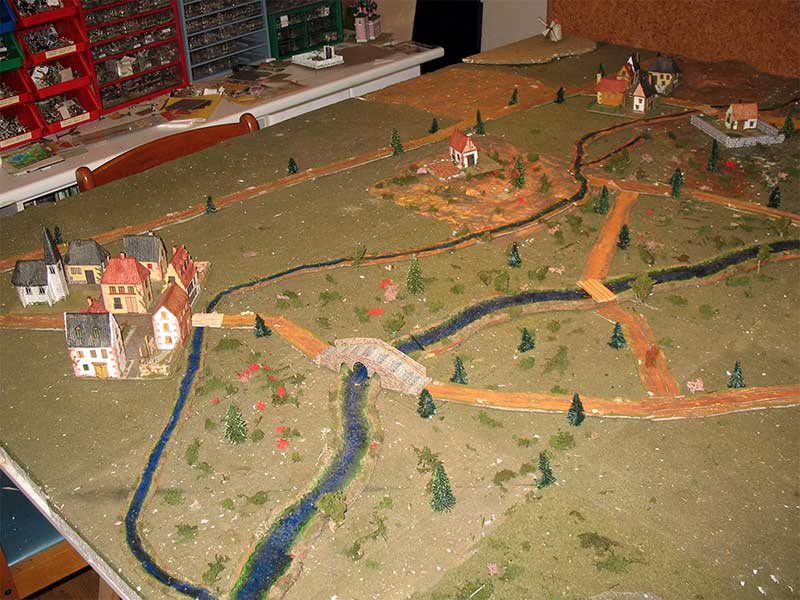
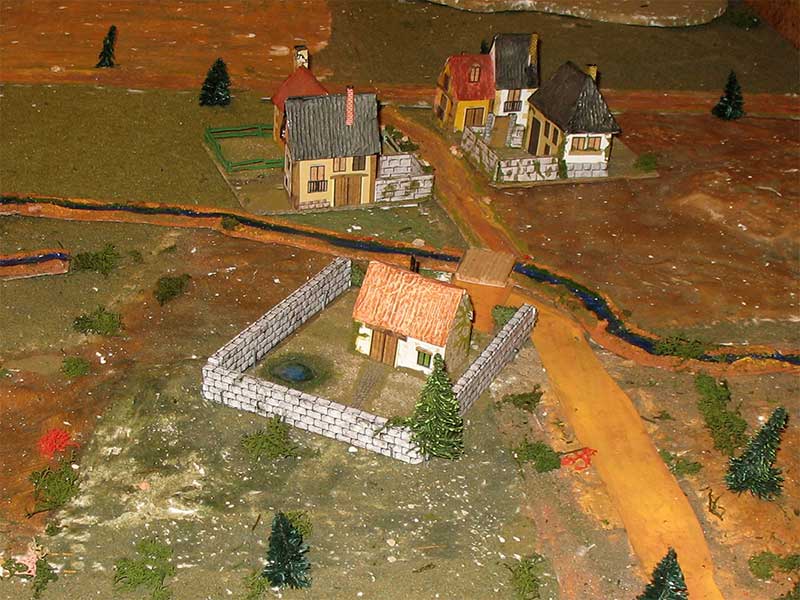
| The actual battlefield | ||
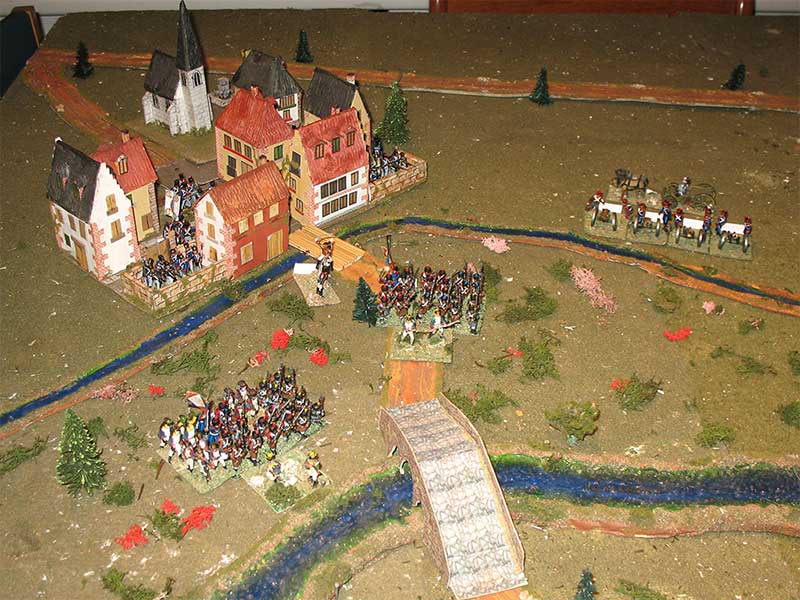 |
French/Polish deployment |
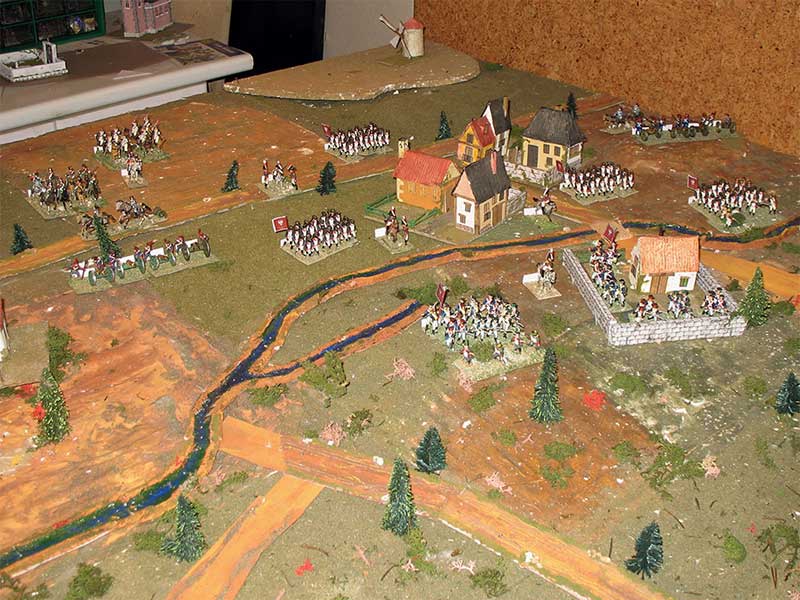 |
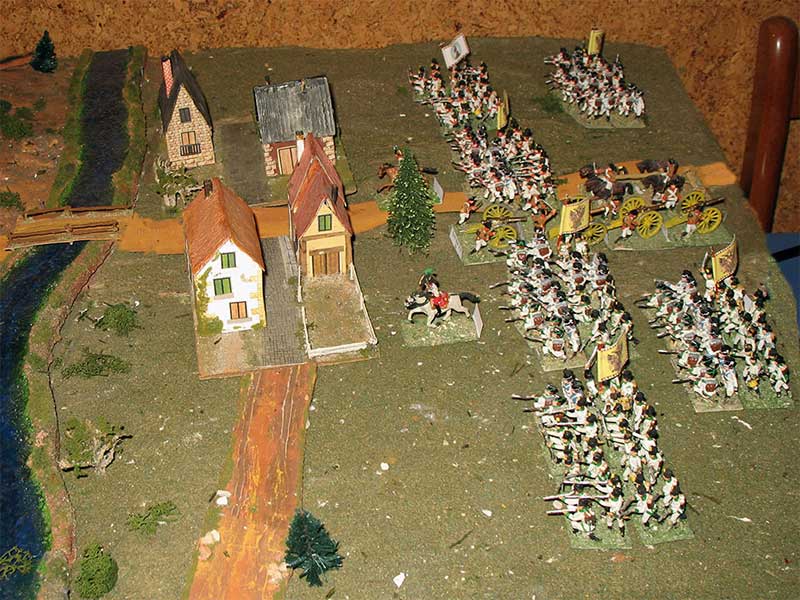 |
Austrian deployment |
 |
| Scenario file for Connewitz (pdf) | ||
| GO TO THE BATTLE IN PICTURES | ||
Polish/French Forces: VIII (Polish) Corps (Army Moral 36 Break point 12)
GdD Prince Poniatowski
26th (Polish) Infantry Division: 6 battalions)
French Division: 5 battalions
27th Light Cavalry Brigade: Polish Cuirassiers, Krakus Cavalry
Artillery: 3 foot batteries
Reinforcements Brigade Aymard: 4 battalions
Austrian Forces: 2nd Army Abteilung Army (Army Moral 48; Break point 16)
General der Kavallerie Graf Meerfeldt
1st Division: 4 battalions, 1 Hussar regimenbt, 1 Dragoon regiment
22nd Division: 6 battalions
Artillery: 2 foot batteries
Reinforcements Brigade Meszerey: 4 battalions 1 foot battery, 1 Bridging train unit
OPTIONAL RULES
Entry point of the reinforcements
French reinforcements can enter at A2/A3/A4/A5 (20% / 40% / 40% / 20%)
Austrian reinforcements can enter at D2/D3/D4/D5 (20% / 40% / 20% / 40%)
Additional French Reinforcements:
The Old Guard The Curial’s 2nd Old Guard Division (a mix of French Middle Guards and Italian/German Guards) took part in the fight in the southern part of the battlefield during the last stages of the combats. They can enter the table game if the Austrians take Connewitz or/and Dölitz, at A1/A2/A3/A4 (25% / 25% / 25% / 25%).
Brigade Rousseau (+1/*)
Velites of Turin Valiant/Experienced/SK2/Guard
Velites of Florence Valiant/Experienced/SK2/Guard
Polish Guard Valiant/Experienced/SK2/Guard
Westphalian Guard Reliable/Amateur/SK1/Guard
French deployment and broken bridges
The Lefol division and the Polish must deploy in their assigned areas. In the real battle, the bridges around Connewitz were broken whereas the ones around Dölitz were left intact. In this Scenario the state of the bridges is not known in advance. An intact bridge implies that the French/Polish units can deploy in the opposite (western) river bank.
Prior to the deployment, the French must roll 1D6 to establish the state of each of the four bridges over the Pleisse River branch. Each bridge is broken on a roll of 4 or higher. An intact bridge can be demolished in any moment by the French player, by following the Demolition Lasalle procedure (See p. 78 of Lasalle book).
The ford at Lösnig
All the watercourses were swollen and the Lösnig ford was unavailable. In this scenario, the state of the fords is unknown until Austrian troops arrive on it. Throw 1D6: on a roll of 5 or higher the ford is available and can be crossed.
Austrian bridging train
In the real battle, the Austrian commander thrown a bridge in the Markleeberg area (upstream out of the table) and the Austrians crossed to the right (French) bank, with Meerfeldt being taken prisoner during the action. The bridging train, if this option is chosen, is an independent reinforcement unit, and must enter the table at the D3 end-road. Only a pontoon bridge unit is available to the Austrians, and the Pleisse branch needs four successful engineering test to be spanned, whereas the minor branch needs only two (See p. 78 of Lasalle book)
Assault of defiles
Lasalle does not allow march columns to fight, so the assaults on defiles, such as bridges, fortified gates, field fortifications, etc.. can not be played on the table in a convincent way. There was some friendly discussions in the Lasalle Forum regarding this topics . At last I have used the Scruf proposal:
1) A march column can assault a defile like a bridge, a fortified gate, a fort, etc. It represents not only true march columns, but also all those formations with a very reduced front.
2) It fights at 1/2 dice and with no previous shooting, adding a -2 for "bad terrain" as they will be fighting in cramped quarters.
3) The enemy can use the "cover" or "higher elevation" modifiers when applicable.
3) However the small front, the enemy never halves their dice
See a more detailed version at the Project Leipzig (1813) blog
THE BATTLE IN PICTURES